Feeds:
Posts
Comments

It’s January and I say it’s never to late or to soon to “Think Spring” even though the St. Paul Winter Carnival Medallion is right around the corner! Finding those spring crappies and planning your next summer vacation starts at home. Now!

While on the Minnesota’s DNR Web site, I found some very good information.
If you’re not familiar with Public Recreation Information Maps (PRIM) or the Recreation Compass (An interactive mapping tool) I strongly suggest you get to know these tools. Listed are all 51 areas of Minnesota and the land available for sale from the DNR. Also valuable when planning a fishing trip are the sporting goods shops along the way and map stores to order large prints of your favorite lake.

For more maps: http://www.dnr.state.mn.us/maps/prim.html

For lakes check out: http://www.dnr.state.mn.us/lakefind/index.html

When you select DNR data — from hunting regulations to historical items or restoring shoreline, you can create customized maps. At the Minnesota’s DNR website it can be used to browse or find a lake and good structure to fish quickly. Shortcut tools enable you to find a particular lake, city or park fast. More maps can be found at ToMO (Tons of Maps Online): http://www.dnr.state.mn.us/maps/tomo.html

Another great document to have on hand is the Minnesota State Forests at: http://files.dnr.state.mn.us/maps/state_forests/sft00046.pdf

For ariel photos go to: http://www.dnr.state.mn.us/airphotos/index.html

Ultimately, if you can’t find what you are looking for, call the DNR information hotline at 1-888-MINNDNR or 651-296-6157 in metro. Another option is to email them at info.dnr@state.mn.us. They have always responded to all my questions.


“Whomever speaks the loudest…get’s the most attention!”

It’s about communication
Kids today are more entertained and made to feel as though they can live a more adventurous life online. Plus, most of the Outdoor Web sites speak to the avid hunter and fishermen who already own a boat, motor and trailer! The future lies with the next generation.

All this talk about raising the cost of licenses…Perhaps is needed — but is it the right time? I’ll give you an example: A local gun range raises their rates — consequently they are loosing members. Will they survive with less members?

What could they have done differently?

They simply could have shut down half of their trap houses and strategically promoted…perhaps Couples Night! to bring more value to their members. Instead, they go after the pockets of those who keep them in business.

It’s marketing 101.
Bring more value and your best advocates will love you for it! In turn, they will utilize your services more and invite others to join in — see where I’m going?

The kids on the couch and the parents who struggle with time need to find more value. Make it about the price of running the DNR and that’s all you’ll have…a bunch of officials looking across the table for money to sustain what they have already created.

On a side note: Never once have I ever been pulled over by the water patrol and asked, “Hello folks! Are you enjoying yourself today?” ”Just checking to make sure everyone is playing save.” See how I took a situation where many of us may have felt as though the officer was there to ticket you and turn a beautiful day into a rain cloud over your head!

I’ll say it again…Bring more value and you’ll attract more to the sport.

I know I may get flack from this email and I’ve broken a few of my own rules about blogging — but this is a time for all of us to concentrate our efforts in a good way. Whether you are a State Official or parent — it’s not about the cost of enjoying nor is it the rules governing Minnesota’s woods and waters, but rather — what memories can we create and what positive influences will we pass on so the next generation will find value in the Outdoors.


“Annual Ice Fishing Event!”

2011 Annual February Festival is sure to be exciting and packed full of fun
for family and friends! Hope to see you out there!

Event takes place Sat. Feb. 5 from 1:00 – 3:00
$6,000 worth of prizes given away!

Click here for more information


“2010 Minnesota Pheasant Hunting Over!”

A beautiful day and a great year spent hunting with friends.

FML Outdoors picture of the Day


“In Pursuit of Life’s Enjoyment — I Remember.”

Happy Holidays.

FML Outdoors picture of the Day


Video of a deer wearing blaze orange.


Chasin’ Tail team uses old car parts to hide themselves while hunting deer.


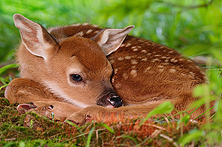
Fawn birth (Late spring/early summer)
Most fawns are born by the last week in May — into the first week or two of June. There are always early-birds and late bloomers. The key here is the abundance of forage for does to consume and produce milk and ultimately — a healthy fawn.
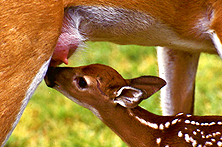
Fawn nursing (Summer)
Fawns begin nursing immediately and continue to nurse throughout the warmer months. Most fawns are completely weened by September. Every now and then you may notice a fawn during the fall trying to nurse, but adult does normally aren’t very receptive and the fawns are able to digest forage by September.

Antler growth (Begins in early summer)
You can start seeing the beginnings of the racks by mid June. By the end of July it’s much easier to see what the buck will likely be (main frame 8-pointer, 10-pointer, etc.) by late August the rack is basically fully grown.
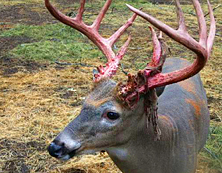
Shedding Velvet (Early fall)
Most velvet sheds in early September. In all the years I’ve hunted, photographed and filmed whitetails, it seems the antler shedding may begin as early as the last week of August, but the bulk occurs the first week of September. By mid September (normally opening day of bow season) the majority of bucks have shed their velvet. Every now and then you may see a buck with velvet but consider it fairly uncommon.
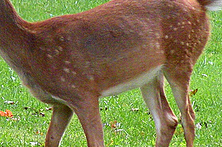
Losing spots/coat change
(Early Fall)
Most fawns shed their spots the first couple weeks into September. Adult deer are also transitioning from their orange-colored summer coats into their thicker, darker fall coats. The transition can occur anywhere from late August into early September. However by mid September most coat changes are complete.
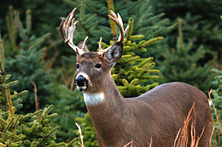
Bachelor group dispersal
(Late summer/very early fall)
Deer begin to get more independent in August. Most buck groups disband by the last week of August to first week of September.
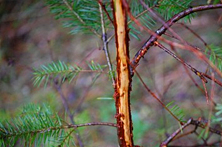
Deer Rubs (Fall)
Aside from velvet shedding rubs, the first rut-related rubs of the season begin to pop up around the 15th of October and increase into the end of the month. Rubs are continually made, visited and refreshed throughout November, with varying degree of activity due to rut phases and conditions.
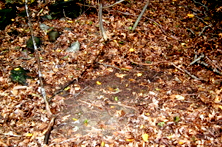
Deer Scrapes (Fall)
Typically linked in occurrence to rubs, these markers begin to pop up the last couple weeks in October and can increase in frequency into November. In the areas that I hunt in Northern Minnesota, I almost always find the season’s first rubs before I find scrapes.
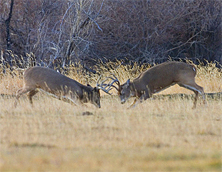
Main Deer Rut Phases (Late fall)
These can vary every year depending on different factors such as deer density, buck to doe ratio, weather, moon phase timing and hunting pressure but overall the days and occurrences are normally very close from season to season.

Seeking Phase
(Late October – early November)
Chasing Phase
(Early November – mid November)
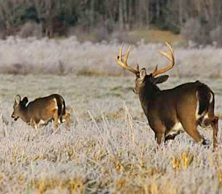
Breeding Phase
(Mid November – late November)
can even last into December, sometimes with a large deer heard and abundance of food, a second, less aggressive rut takes place. Often young does are bred during this time.

It’s also important to note here that when an adult doe reaches estrous, it lasts for around 36 hours while the entire breeding phase of the rut can last for many days given the fact that more than one doe enters estrous.
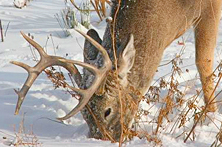
Key back in on food sources
(Late November/into winter)
Can depend on region and weather. Normally deer focus heavily on food sources after the rut into winter and really hit the food hard after the first major drop in temperatures and/or first major snowfall. In northern Minnesota most deer begin to consistently focusing on food sources by the first two weeks of December. This behavior continues throughout winter, as food becomes the main drive. When it comes to late season hunting the way to a buck is through his stomach!
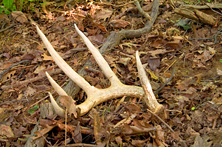
Shed antlers (January/February)
Can depend on climate and availability of food. Sometimes bucks lose their antlers as early as late December and I’ve even watched deer keep their headgear into late March. This is not common however and the majority of antlers are shed mid to late January into February.

“Enjoying the Snow!”

Photo by Diana Wise Photography

FML Outdoors picture of the Day


To say this season has been odd — would be an understatement! The early season’s weather made hunting conditions, in many areas, less than ideal. This left a lot of folks banking on the rut, which ultimately fell pretty flat for many hopeful hunters. The 2010 deer season has been a head-scratcher. Even so, we have been fortunate this year.

We’ve had steady deer activity despite very unusual patterns all season.

At Chasin’ Tails, we are fortunate to have harvest a number of deer. Both Justin and our dad scored impressive bucks and only until recently…I was rewarded a nice doe. Each season has its ups and downs. All we can do is put in our time to win. Lose or draw, it’s important to enjoy the pursuit. Continue Reading »


From Chasin’ Tail to First Blood, Jacob McIntosh gets on the trail of a wounded doe.


Floyd’s Bar, Victoria Minnesota, enjoys Crawfish Boil as FML Outdoors shows us how to catch crayfish.


“Shirley Worth A Laugh or Two!”

Leslie Nielsen dies at 84.


“Whitetail Party On Wheels!”

Everyone should have one of these!